

HDBullyBaum
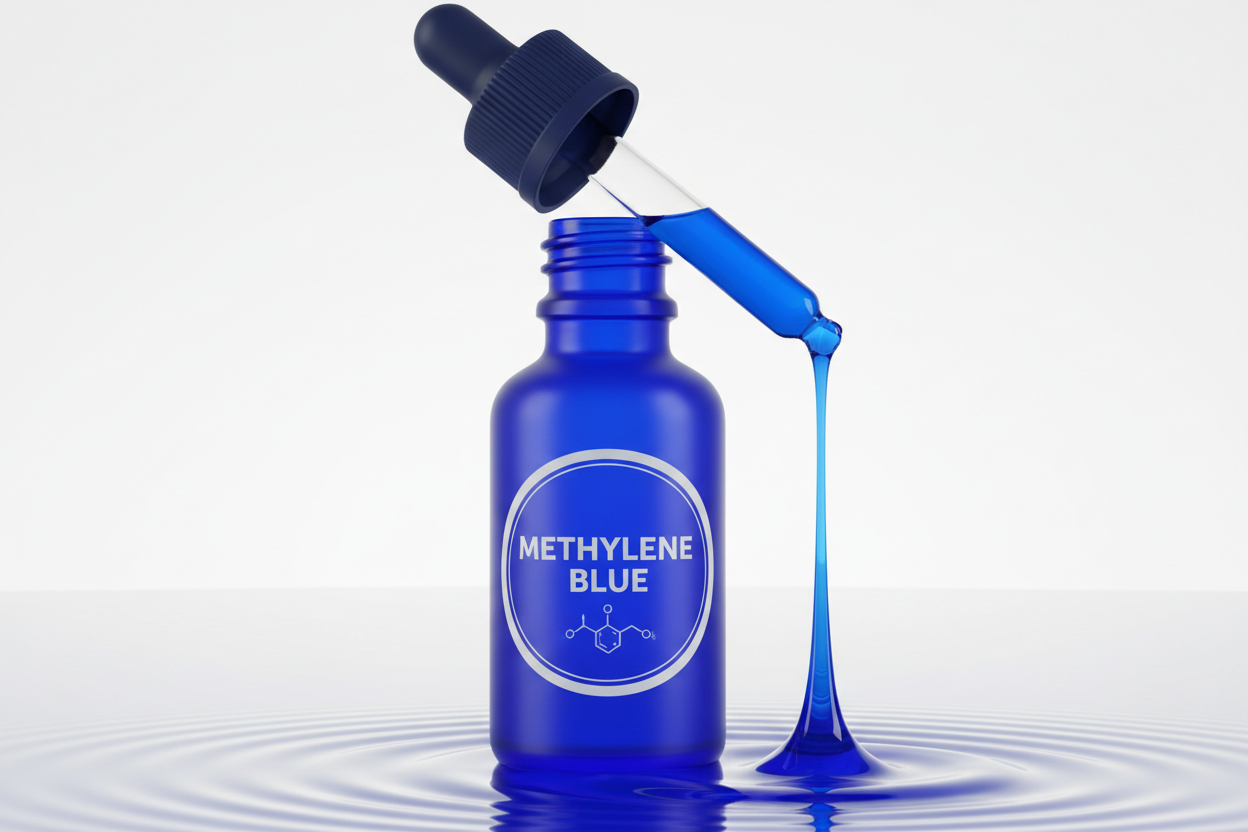
Methylene Blue USP Grade 1% 30ml
Methylene Blue USP Grade 1% 30ml
Couldn't load pickup availability
Share
Bully Baum
Methylene Blue
Highlights
Low dose Methylene Blue supplementation shown to provide memory enhancing effects in animals and humans. It works as an antidepressant, is anti-aging, helps dementia, Huntington’s and Alzheimer’s.Shows promise in research for treating malaria,certain neurological conditions like Alzheimer's and Parkinson's, and acts as a dye to help detect abnormal cells, including cancer cells.
Methylene Blue reduced cognitive decline by 81% in Alzheimer's patients in one year.Exploring Methylene Blue in Alzheimer's Treatment
Methylene Blue increases low blood pressure, improves cognition in healthy people, boosts mitochondrial function, is anti-microbial, can help eliminate fear and even slow skin aging.
Sources:
nih.gov/compound/Methylene-Blue
health.harvard.edu/diseases-and-conditions/what-to-know-about-methylene-blue
nootropicsexpert.com/methylene-blue
Benefits
Methylene Blue benefits
Methylene Blue helps:
- Neurotransmitters: Methylene Blue inhibits monoamine oxidase and acetylcholinesterase activity which increases levels of catecholamines and acetylcholine. And boosts serotonin and norepinephrine affecting anxiety, depression and memory.
- Mitochondrial Energy: Methylene Blue helps brain cells use more oxygen and donates electrons in mitochondria, which are needed to produce energy (ATP) from food. By supporting this process, it increases cellular energy, which can improve mood and memory.
- Neuroprotectant: Methylene Blue is a powerful antioxidant. It targets harmful molecules called reactive oxygen species made in mitochondria. The first of these, superoxide, is neutralized by Methylene Blue, which converts it to water and prevents damage from starting.
Low dose Methylene Blue supplementation provides memory enhancing effects in animals and humans. It works as an antidepressant, is anti-aging, helps dementia, Huntington’s and Alzheimer’s.
Methylene Blue increases low blood pressure, improves cognition in healthy people, boosts mitochondrial function, is anti-microbial, can help eliminate fear and even slow skin aging.
Methylene Blue boosts acetylcholine
Research shows that Methylene Blue is an acetylcholinesterase inhibitor with a preference for muscarinic acetylcholine receptors. Meaning MB prevents the breakdown of acetylcholine and making more available in your brain.[vii]
Methylene Blue is an antidepressant
Methylene Blue is a monoamine oxidase inhibitor (MAOI). It inhibits MAO-A more than MAO-B, but inhibits both at large doses.[viii]
One study in 1987 showed that 15 mg per day of Methylene Blue was a potent antidepressant in those with severe depression.[ix]
Another study with 31 Bipolar Disorder patients compared 300 mg per day of Methylene Blue with 15 mg per day. The patients were also on lithium treatment. The study showed that the 300 mg dose of Methylene Blue was a “useful addition to lithium in the long-term treatment of manic-depressive psychosis”. And patients were significantly less depressed.[x]
Methylene Blue resists Alzheimer’s Disease
Alzheimer’s disease and other forms of dementia are associated with a buildup of the protein Tau. Clinical trials show that Methylene Blue inhibits Tau formation. And is under consideration as a treatment for Alzheimer’s.[xi]
Methylene Blue has an inhibitory action on the cGMP pathway, and affects other molecular events closely related to the progression of Alzheimer’s.
Methylene Blue boosts neuron resistance to the formation of amyloid plaques and neurofibrillary tangles. And helps repair impairments in mitochondrial function and cellular metabolism.
Research also shows that cholinergic, serotonergic and glutamatergic systems all play important roles in the development of Alzheimer’s and other cognitive disorders. Methylene Blue provides beneficial effects in mediating these pathways.[xii]
This is particularly significant because most existing treatments for Alzheimer’s can only prevent the disease before it is diagnosed. But Methylene Blue shows promise in delaying the effects of Alzheimer’s and dementia after it is diagnosed.
Methylene Blue is anti-aging
Research shows that Methylene Blue is an effective anti-aging nootropic. MB increases mitochondrial complex IV by 30%, enhances cellular oxygen consumption by 37-70%, increases heme synthesis, and reverses premature senescence caused by H2O2 or cadmium.
Methylene Blue is considered a redox agent. Meaning it cycles between oxidized and reduced forms. This cycling by MB helps block oxidant production in brain cell mitochondria.[xiii]
Mitochondrial complex IV is the last enzyme in the respiratory electron transport chain in mitochondria. The last step in synthesizing ATP. Your cellular source of energy.
Iron (heme) is an essential element and participates in oxygen transport, DNA synthesis and electron transport. Heme synthesis begins in mitochondria. Every cell requires heme to function properly.[xiv]
Senescence or biological aging is the gradual deterioration of cellular function. And is caused by telomere shortening that triggers DNA damage in response to reactive oxygen species, hydrogen peroxide (H2O2), cadmium and other toxins. Methylene Blue helps prevent premature senescence or premature cell death.
Methylene Blue improves memory
Animal studies have shown that a single low dose of Methylene Blue enhances long-term contextual memory. This type of memory is the conscious recall of the source and circumstances of a specific memory.
Other studies show that Methylene Blue in low doses taken after the event helps memory retention of the event. A study done with rats revealed why this works.
In this study, rats received 1 mg/kg of MB post-training for 3 days. The researchers then measured cytochrome c oxidation in participants brains. The idea was to determine if an increase in metabolic energy was behind the memory enhancing qualities of MB.
The study found that in the Methylene Blue treated group, brain cytochrome oxidase activity was 70% higher than in the placebo-treated group.
The findings suggest that repeated post-training supplementation of Methylene Blue improves memory consolidation. And this memory boost is due to the increased metabolic capacity in brain regions that require more energy during discrimination learning.[xv]
Methylene Blue Improves Memory
26 healthy volunteers aged 22 – 62 participated in a double-blind, randomized, placebo-controlled clinical trial. Purpose of the study was to measure the effects of Methylene Blue on working memory and sustained attention.
Study results showed that a single low-dose of Methylene Blue resulted in an increase in short-term memory ability. In an area of the brain associated with the senses and visual processing.
Timothy Duong, Ph.D., the study author concluded Methylene Blue showed promise “in healthy aging, cognitive impairment, dementia and other conditions that might benefit from drug-induced memory enhancement”.[xviii]
A study in the American Journal of Psychiatry found that Methylene Blue helps reduce long-term fear by improving memory. Participants who took Methylene Blue after a fear-inducing experience retained less fear one month later compared to those who took a placebo. The researchers concluded that Methylene Blue enhances memory and supports the lasting removal of fear.
Methylene Blue helps Bipolar Disorder
Animal studies show Methylene Blue may help reduce depression and anxiety by boosting serotonin and dopamine. Research from Dalhousie University tested Methylene Blue with lamotrigine in bipolar disorder patients. Those taking a higher dose (195 mg) had better mood improvements than those on a lower dose (15 mg). Some patients continued using Methylene Blue after the study, suggesting it may support bipolar symptom management.
Overview
How does Methylene Blue work in the brain?
Methylene Blue boosts brain health and function in several ways. But two in particular stand out.
- Methylene Blue improves memory. Unlike other nootropics which often work by increasing neurotransmitter synthesis and neural signaling, MB improves memory by increasing brain cell respiration. Or how the brain cell utilizes oxygen.
Methylene Blue boosts brain energy by increasing oxygen use and glucose uptake in cells. It acts as an alternative electron carrier in mitochondria, helping transfer electrons and supporting the electron transport chain. This process raises ATP production, providing more energy for improved brain functions like cognition, mood, and memory.
- Methylene Blue is an antioxidant. MB has a unique mechanism of action that is fundamentally different from traditional antioxidants. During cellular respiration, the first free radical formed inside a cell is superoxide (O2).
Methylene Blue Clinical Research
Research into Methylene Blue for its therapeutic value goes back to the late 1800’s. But it’s only in the last couple of decades that scientists have been able to decode exactly how Methylene Blue works in the brain. All the way down to the molecular level in mitochondria.
A study in 2017 found that Alzheimer’s Disease could be caused by more than the accumulation of amyloid beta in the brain. The scientists looked into the two main components that produce energy in cells.
- Glycolysis is the mechanism used to convert glucose into fuel within mitochondria.
- Creating this fuel in mitochondria uses oxygen in a process called mitochondrial respiration.
As the brain ages, its mitochondria produce less energy, which may contribute to diseases like Alzheimer’s and Parkinson’s. Research from Children’s Hospital Oakland shows that Methylene Blue can help slow this decline by improving mitochondrial function, especially complex IV activity. It boosts oxygen use and helps prevent early cell death, suggesting it may delay mitochondrial problems linked to aging and Alzheimer’s disease.
History
Methylene Blue (methylthioninium chloride) is a synthetic compound used as a nootropic to increase memory, mood and longevity.
Methylene Blue was first made as a blue dye in the late 1800s and soon became the first synthetic drug used in people, initially to treat malaria. In the early 1900s, it was tested for schizophrenia. Today, it is being studied for mild cognitive problems, Alzheimer’s, Parkinson’s, and other brain diseases linked to mitochondrial issues. Since brain cells rely heavily on mitochondria for energy, Methylene Blue helps by improving mitochondrial function, acting as an antioxidant, and extending brain cell life. This leads to better memory and mood, supported by over 140 years of research.
Methylene Blue (methylthioninium chloride)
Methylene Blue was first made in 1876 by German chemist Heinrich Caro as a dye for cotton. In 1891, Nobel Prize winner Paul Ehrlich used it to treat malaria and found it quickly gathered in the brain, targeting diseased tissues—a property he called the “Magic Bullet.” Since then, Methylene Blue has been used to treat dementia, cancer, malaria, blood disorders, infections, and poisonings. As a nootropic, it helps improve mitochondrial function, increases blood flow in the brain, and acts as an antidepressant.
Directions:
Methylene Blue Dosage Recommendations
Recommended safe doses based on clinical studies with animals and humans ranges from 0.5 – 4 mg/kg. So a 90 kg (200 lb.) body weight translates to 45 – 360 mg of Methylene Blue.
45 mg of a Methylene Blue dose is a safe. But 360 mg of MB is much too high even if you’re 200 lbs.
There is no set recommended dose for Methylene Blue. Start with a low dose of 0.5 mg/kg and see how you respond before taking more. It is water-soluble, so it doesn’t need to be taken with food or fat. Its effects last about 5 hours, allowing for twice-daily dosing. Higher doses (over 500 mcg) may cause blue urine, which can sometimes be prevented by mixing with ascorbic acid before use. Methylene Blue is also available as an injection for medical treatments like malaria and cancer therapy.
Warnings
Methylene Blue Potential Drug Interactions & Side Effects
Methylene Blue has different effects depending on the dose: low doses support brain function, while high doses may disrupt cellular energy and act as a pro-oxidant. Even pharmaceutical-grade Methylene Blue can contain trace heavy metals, which can accumulate at higher doses and pose health risks. Side effects are rare below 2 mg/kg but may include stomach or chest pain, dizziness, headache, skin or urine discoloration, and other symptoms. Patients with liver issues should be monitored carefully when using this compound.
Reduce the Risk of Serotonin Syndrome
Methylene Blue can interact dangerously with many antidepressants and antianxiety medications, especially those affecting dopamine or serotonin. Avoid using it if you take SSRIs, MAOIs, or related drugs, as this may cause serious conditions like hypertensive crisis or Serotonin Syndrome. It is also unsafe during pregnancy, breastfeeding, or if you have kidney problems. Always consult your healthcare provider before use to ensure safety.
Subscribe to our emails
Be the first to know about new collections and exclusive offers.